

Most DIY builders waste hours calculating lumber sizes and cutting layouts when they could get complete shed plans for $7-$37. The frustration of buying “plans” only to discover they’re missing the materials list or cut diagrams has burned countless weekend warriors. Where can I get shed plans with a materials list and cut list that actually work?
Key Takeaways
• Complete shed plans with materials lists cost $7-$27 for single designs or $37 for entire libraries
• Free plans rarely include proper cut diagrams showing board layout optimization
• MyShedPlans offers 12,000+ designs with full materials lists and cut lists for $37 total
• Single-plan sellers like MyOutdoorPlans work best when you know exactly which shed style you want
• A proper cut list includes every piece dimensioned, quantities stated, and waste accounted for
• Bulk libraries become cost-effective if you plan to build more than one shed or want to browse options
• Check for fastener schedules and foundation requirements before purchasing any plan
Where Can I Get Shed Plans with a Materials List and Cut List?
Shed plans with a full materials list and cut list come from three places: paid single-plan sellers ($7,$27 per design), bulk plan libraries such as MyShedPlans ($37 for the whole library), and a small number of free sources. Free plans most often omit the cut diagram, the sheet showing how to lay parts out per board with minimum waste.
The economics are straightforward. Single-plan sellers work when you know exactly which shed you want to build. Bulk libraries make sense if you want to browse designs or plan multiple projects. Free sources exist but rarely provide the cutting optimization that saves both money and time at the lumber yard.
What Are Shed Plans with Materials List vs Cut List vs Cut Diagram
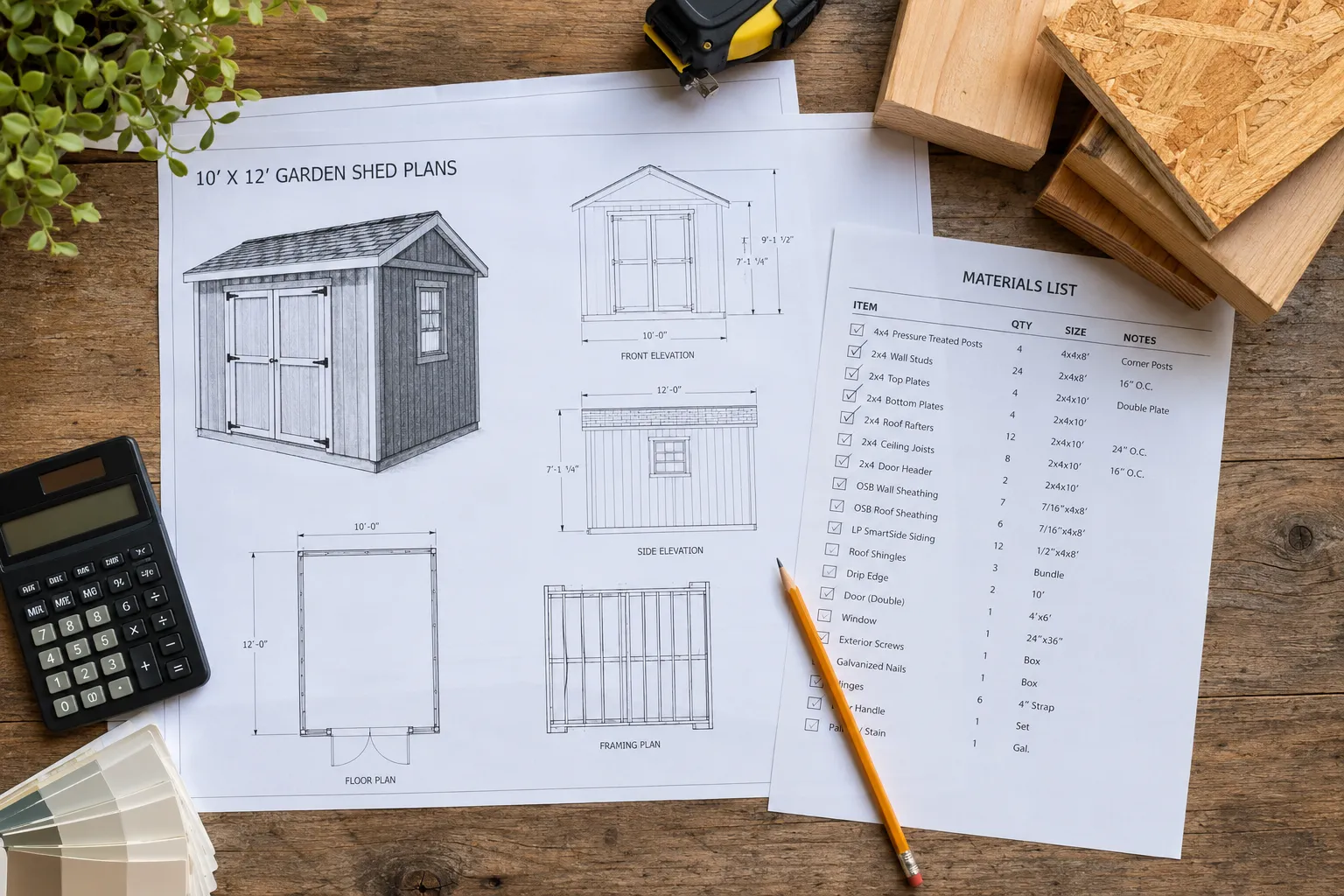
A materials list tells you what to buy: “6 pieces of 2x4x8, 12 pieces of 2x6x10, 4 sheets of 3/4″ plywood.” A cut list tells you what to cut: “Cut (4) 2x4s to 92 inches for wall studs, cut (2) 2x6s to 144 inches for floor joists.” A cut diagram shows you how to lay out those cuts on each board to minimize waste.
Here’s how they work together for a 10×12 shed:
- Materials list: 24 pieces of 2x4x8 lumber
- Cut list: From those 24 boards, cut 16 pieces at 92″ for wall studs, 8 pieces at 45″ for blocking, 12 pieces at 22.5″ for headers
- Cut diagram: Shows you can get one 92″ stud plus one 45″ block from each 8-foot board, with only 7 inches of waste per board
Most free plans stop at the materials list. You’re left figuring out the cutting yourself, which typically wastes 15-25% more lumber than an optimized layout.
Single-Plan Sellers ($7,$27 Per Design)
MyOutdoorPlans, HowToSpecialist, and Plans Now sell individual shed designs with complete materials and cut lists for $7-$27 each. These work best when you know exactly which shed you want to build and don’t need to browse multiple options.
MyOutdoorPlans offers the most detailed single plans, with every board dimensioned and a complete fastener schedule. Their 12×16 gable shed plan ($19) includes foundation details and three different roofing options. The downside: no refunds if the design doesn’t fit your yard or needs.
HowToSpecialist provides solid mid-range plans ($12-$18) with good cut diagrams but sometimes skips minor hardware details. Their lean-to shed plans work well for beginners because they avoid complex roof cuts.
Plans Now sells budget options ($7-$12) that cover the basics but may require you to figure out trim details and door hardware yourself. Choose these if you’re comfortable filling in small gaps.
The math is simple: if you’re building one shed and know the style you want, single plans cost less. If you want to compare designs or might build again, the economics flip toward bulk libraries.
Bulk Plan Libraries ($37 for Complete Access)
MyShedPlans and similar bulk libraries flip the economics once you want to browse designs or build more than once. For $37, you get access to thousands of shed plans, each with materials lists and cut diagrams.
The value becomes obvious when you consider browsing costs. Looking at five individual plans from single sellers costs $35-$135. A bulk library costs $37 total and lets you compare dozens of designs before choosing.
MyShedPlans includes 12,000+ designs covering every shed style from basic gable sheds to complex gambrel barns. Each plan includes the three essentials: dimensioned drawings, complete materials lists, and optimized cut diagrams. You also get foundation options, door and window details, and roofing specifications.
The library approach works especially well for first-time builders who aren’t sure which style suits their needs. You can download plans for a 10×12 gable shed, a 12×16 gambrel, and an 8×10 lean-to, then choose based on your skill level and yard constraints.
Browse the full shed plan library to see the complete design selection and what’s included in each plan package.
Best Websites for Free Shed Plans and Cut Lists
Construct101 provides six free shed plans with dimensioned drawings and complete materials lists, making it the most reliable free source for complete plans. Their 8×12 gable shed plan includes floor, wall, and roof materials with quantities specified.
Family Handyman offers three free shed plans with materials lists but no cut diagrams. You’ll need to optimize the lumber layout yourself, which typically adds 15-20% to material costs through waste.
Popular Mechanics provides two detailed free plans with excellent construction notes but basic materials lists. Their 10×10 shed plan includes foundation details but leaves hardware selection to you.
The reality about free sources: they exist to drive traffic to paid products or magazine subscriptions. The plans are real and buildable, but they rarely include the cutting optimization that saves money and time. Expect to spend extra hours calculating board layouts and accept higher lumber costs from inefficient cuts.
How Much Do Detailed Shed Plans Cost in 2026
Individual shed plans with complete materials lists and cut diagrams cost $7-$27 depending on complexity and detail level. Simple 8×10 gable sheds start at $7, while complex 16×20 gambrel designs reach $27. Most popular sizes (10×12 to 12×16) cost $12-$19 per plan.
Bulk plan libraries cost $37-$67 for lifetime access to thousands of designs. MyShedPlans at $37 offers the best value for most builders, while premium libraries reaching $67 add features like 3D renderings and video tutorials.
Cost comparison for building three different sheds:
- Individual plans: $21-$81 total ($7-$27 each)
- Bulk library: $37 total (unlimited designs)
- Free plans: $0 upfront, but 15-25% higher lumber costs from cutting waste
The break-even point sits around two shed projects. If you’re building once, individual plans cost less. If you’re building twice or want to browse options, bulk libraries win.
How to Check a Plan Has a Real Cut List Before You Buy
See what a complete plan package looks like before making any purchase decision.
Use this five-point checklist to verify you’re getting a complete plan:
- Every piece dimensioned: The plan should list “cut (4) 2x4s to 92 inches” not “cut 2x4s for studs”
- Quantities stated: Look for specific counts like “16 wall studs” rather than “studs as needed”
- Board lengths specified: Materials list should show “2x4x8” and “2x4x10” separately, not just “2×4 lumber”
- Waste accounted for: Good plans add 5-10% extra materials for cutting errors and damage
- Fastener schedule present: Complete plans specify “3-inch deck screws (24 required)” not “screws for assembly”
Red flags include vague language like “lumber as needed,” missing hardware details, or plans that show only finished drawings without construction steps. Quality plans feel like instruction manuals; incomplete plans feel like rough sketches.
Shed Plans for Beginners vs Experienced Builders
Beginner shed plans focus on simple gable or lean-to designs with straight cuts and basic framing techniques. These plans include extra detail on tool requirements, safety notes, and step-by-step assembly sequences. Look for designs under 12×12 feet with standard 16-inch stud spacing.
Experienced builders can handle gambrel roofs, complex door systems, and custom modifications. Advanced plans assume you understand framing basics and focus more on efficient construction sequences and material optimization.
Skill-matched recommendations:
- First-time builders: 8×10 or 10×12 gable sheds with pre-hung doors
- Weekend warriors: 12×16 gable or simple gambrel designs
- Experienced carpenters: Complex gambrels, multi-level designs, or custom modifications
The plans themselves don’t change your skill level, but choosing appropriate complexity prevents frustration and project abandonment.
Are Pre-Made Shed Plans Accurate for My Climate and Yard Size
Standard shed plans work in most climates but may need modifications for extreme conditions. Plans designed for moderate climates handle snow loads up to 30 pounds per square foot and wind speeds to 90 mph. Higher loads require engineered modifications to roof framing and foundation systems.
Climate modifications you might need:
- Heavy snow areas: Upgrade roof framing from 2×6 to 2×8 rafters, reduce spacing to 12 inches
- High wind zones: Add hurricane ties and upgrade foundation anchoring
- Wet climates: Specify pressure-treated lumber for bottom plates and add vapor barriers
Yard size affects shed placement more than plan selection. Most plans work on level lots with 3-foot clearances on all sides. Sloped lots may need foundation modifications, and tight spaces might require door relocation.
Check your local building codes before starting. Some areas require permits for sheds over 120 square feet or 10 feet in height, regardless of which plans you use.
Common Mistakes People Make with Shed Plan Cut Lists
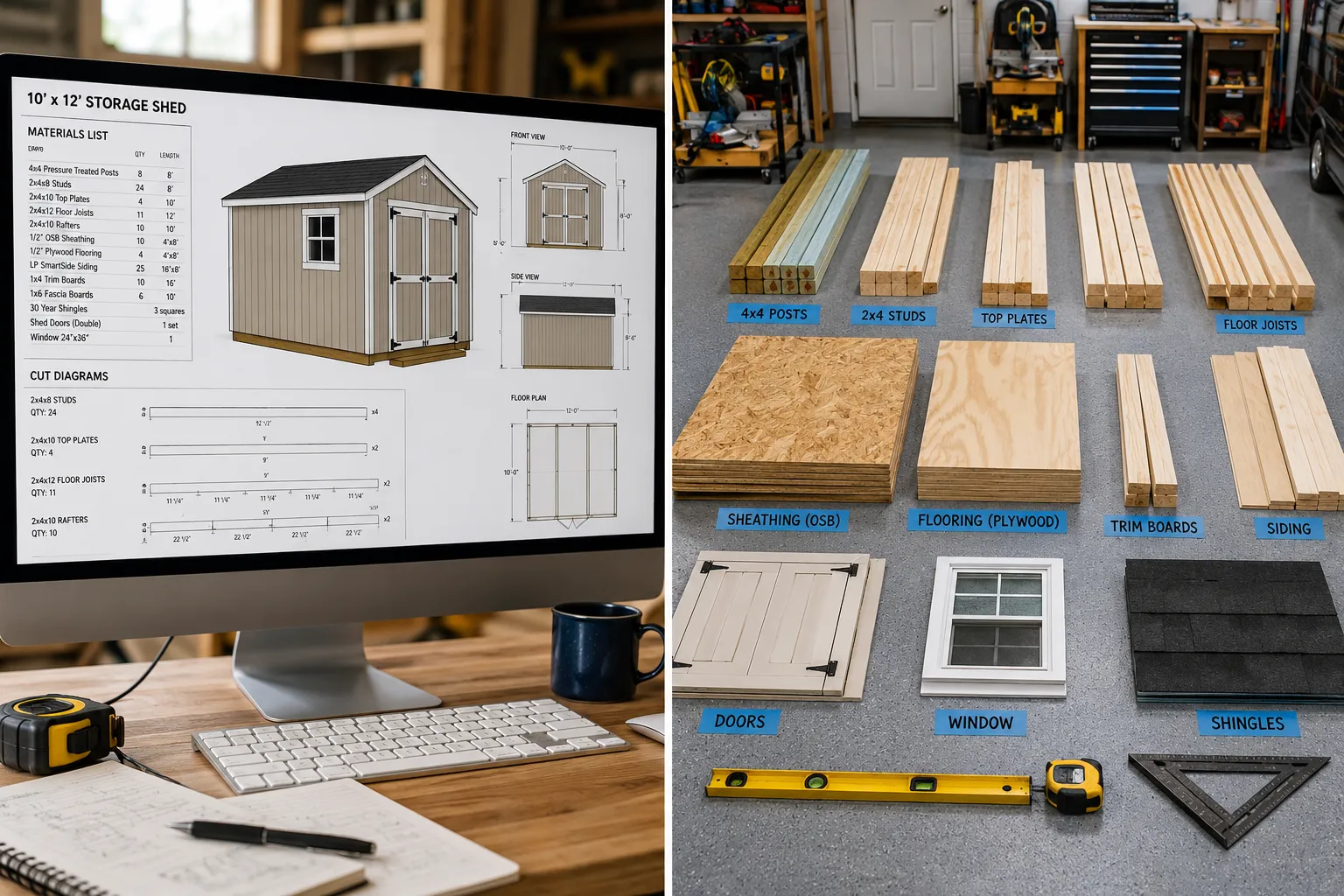
The biggest mistake is ignoring the cut diagram and making your own layout decisions. Optimized cut diagrams minimize waste by arranging pieces to use full board lengths efficiently. DIY layouts typically waste 20-30% more lumber through poor planning.
Other frequent errors:
- Buying exact quantities: Always add 5-10% extra for cutting mistakes and damaged boards
- Mixing lumber grades: Don’t substitute construction-grade lumber for structural pieces without checking load requirements
- Skipping the fastener schedule: Using wrong screw lengths or nail types can compromise structural integrity
- Ignoring moisture content: Kiln-dried lumber shrinks less than green lumber, affecting joint fit
I’ve seen builders save $50 on lumber only to spend $200 fixing structural problems from using undersized fasteners or wrong lumber grades. Follow the specifications exactly for your first shed, then modify future projects based on experience.
Can I Use Shed Plans from Different Sources Together
Mixing plans from different sources creates compatibility problems because each designer uses different standards for lumber sizing, foundation systems, and construction methods. A floor plan from one source may not match wall plans from another due to different assumptions about lumber dimensions or assembly sequences.
Safe mixing strategies:
- Use one source for structural elements (floor, walls, roof) and others for accessories (shelving, workbenches)
- Adapt door and window details from other plans to your main design
- Borrow foundation options if soil conditions differ from your main plan
Avoid mixing:
- Floor and wall plans from different sources
- Roof systems with different rafter spacing assumptions
- Plans with different lumber grade requirements
Stick with one complete plan for your first shed. After you understand how the pieces fit together, you’ll be better equipped to modify or combine elements from multiple sources.
Do Shed Plans Include Roofing Materials and Foundation Requirements
Complete shed plans include roofing materials in the materials list: shingles, underlayment, drip edge, and ridge caps with quantities specified. They also show foundation options ranging from concrete pads to treated lumber skids, with materials lists for each option.
Standard roofing materials included:
- Asphalt shingles (calculated by square footage plus waste)
- Roofing underlayment (15 or 30-pound felt)
- Drip edge and flashing materials
- Ridge caps and starter strips
- Roofing nails (quantity specified)
Foundation options typically covered:
- Concrete slab with materials and thickness specified
- Concrete pier foundations with spacing requirements
- Treated lumber skid foundations with gravel base details
- Block foundations for level lots
Lower-quality plans may show foundation options without material specifications, leaving you to calculate concrete quantities and reinforcement requirements yourself.
Which Source Fits Your Project: Decision Tree by Builder Type
Building your first shed and know the exact style you want? Choose individual plans from MyOutdoorPlans or HowToSpecialist ($12-$19). You’ll get complete materials lists and cut diagrams without paying for designs you won’t use.
Want to compare multiple designs before deciding? MyShedPlans (best for browsing multiple designs) gives you access to thousands of plans for $37 total. The cost of comparing just three individual plans exceeds the library price.
Planning to build multiple sheds over time? Bulk libraries pay for themselves after the second project. You’ll have plans ready for storage sheds, workshops, and garden buildings without additional purchases.
Working with a tight budget and comfortable filling in details? Free plans from Construct101 provide solid starting points, but expect to spend extra time calculating cut layouts and sourcing hardware details.
Building in extreme weather conditions? Choose plans from sources that specify engineering standards and offer climate modifications. Individual plan sellers often provide better technical support for unusual conditions.
The right choice depends on your timeline, budget, and building experience. Most first-time builders benefit from complete individual plans, while experienced DIYers often prefer the flexibility of bulk libraries.
Conclusion
Getting shed plans with complete materials lists and cut lists doesn’t have to involve guesswork or frustration. Individual plans cost $7-$27 and work perfectly when you know exactly what you want to build. Bulk libraries at $37 make sense for browsing options or planning multiple projects. Free sources exist but rarely include the cutting optimization that saves time and money.
The key is matching your source to your project scope and experience level. First-time builders benefit from detailed individual plans with step-by-step guidance. Experienced builders often prefer bulk libraries for design flexibility and future projects.
Before buying any plans, verify they include dimensioned cut lists, complete materials specifications, and fastener schedules. These details separate professional plans from rough sketches and determine whether your project succeeds or becomes a weekend nightmare.
Start with plans that match your skill level and yard constraints. You can always tackle more complex designs once you’ve built confidence with a successful first project.

SEO Meta Title: Where to Get Shed Plans with Materials List & Cut List 2026