

Most quality shed plans include a lumber shopping list, but the completeness varies significantly between paid and free options. Paid plans typically provide detailed shopping lists with exact board lengths and quantities, while free plans often skip this crucial step and leave you to figure out materials on your own.
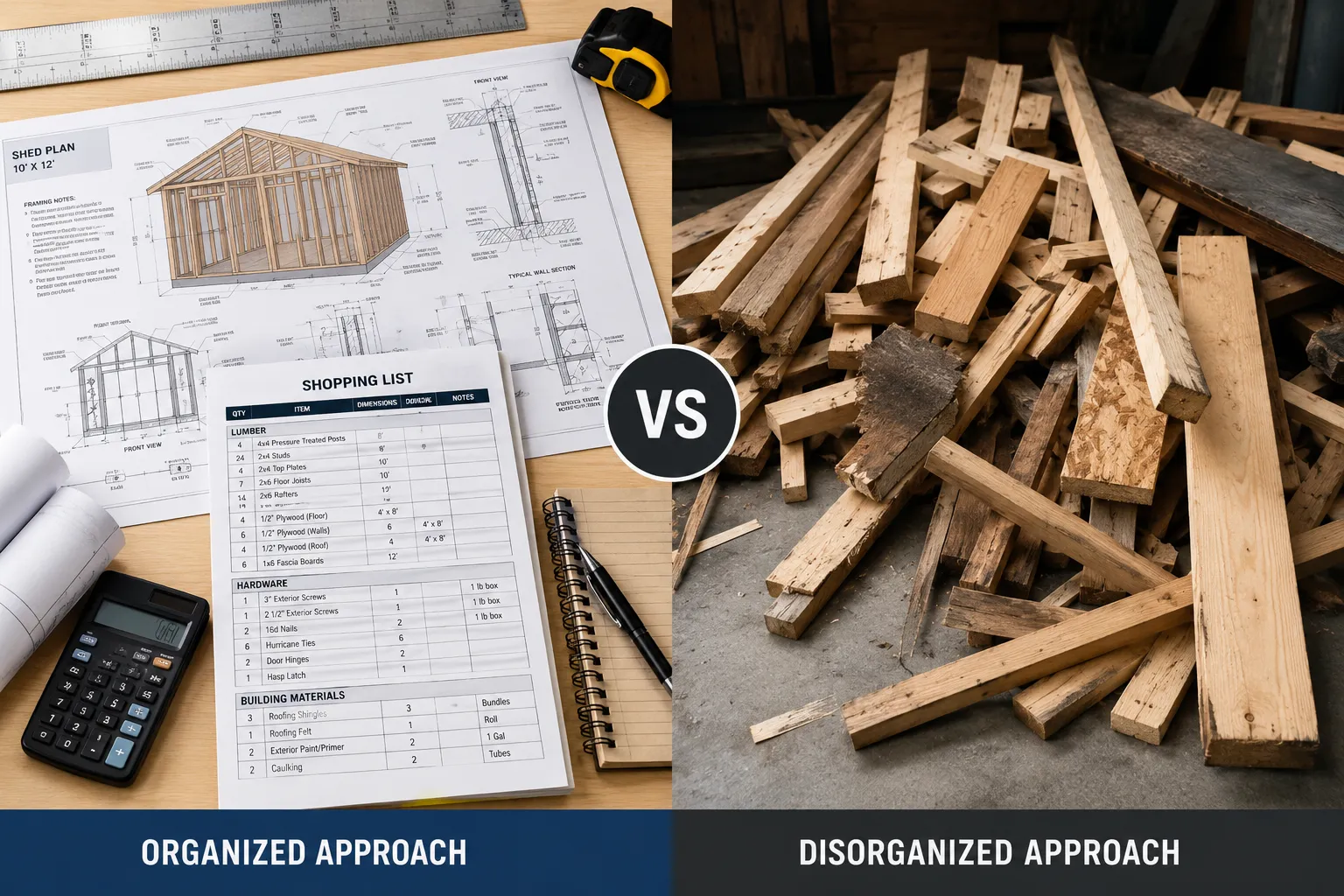
Key Takeaways
- Paid plans usually include shopping lists – Professional plan sets almost always provide complete material lists
- Free plans often don’t – Many DIY websites offer plans without shopping guidance
- Three different documents serve different purposes – Shopping lists, cut lists, and cut diagrams each solve specific problems
- You can create your own shopping list – Converting a cut list into a shopping list takes basic math skills
- Shopping lists save time and money – Proper lists prevent multiple trips to the lumber yard and reduce waste
- Quality varies widely – Some shopping lists are thorough while others miss critical details
- Pre-made kits include everything – Shed kits eliminate the guesswork but cost significantly more
Do shed plans come with a lumber shopping list?
The answer depends entirely on where you get your plans and whether you’re paying for them. Professional shed plan providers typically include comprehensive shopping lists as a standard feature, while free plans downloaded from DIY blogs or forums rarely provide this level of detail.
Paid plans from established providers almost always include shopping lists. Companies like MyShedPlans at https://outdoorbuild.com/shedplans build their reputation on providing complete packages that include not just the blueprints, but also detailed material lists, cut lists, and step-by-step instructions. These shopping lists typically specify exact lumber dimensions, quantities, hardware requirements, and even roofing materials.
Free plans present a mixed bag. While some generous creators include basic material lists, most free shed plans focus solely on the construction drawings. You’ll often find a basic overview like “requires 2×4 framing lumber and plywood sheathing” without specific quantities or dimensions.
The quality difference is substantial. I’ve used both types, and the time saved with a proper shopping list easily justifies the cost of paid plans. Without one, you’re essentially reverse-engineering the material requirements from the blueprints, a time-consuming process that often leads to mistakes.
Shopping list vs cut list vs cut diagram
Many builders confuse these three documents, but each serves a distinct purpose in your shed project. Understanding the differences helps you work more efficiently and avoid costly mistakes.
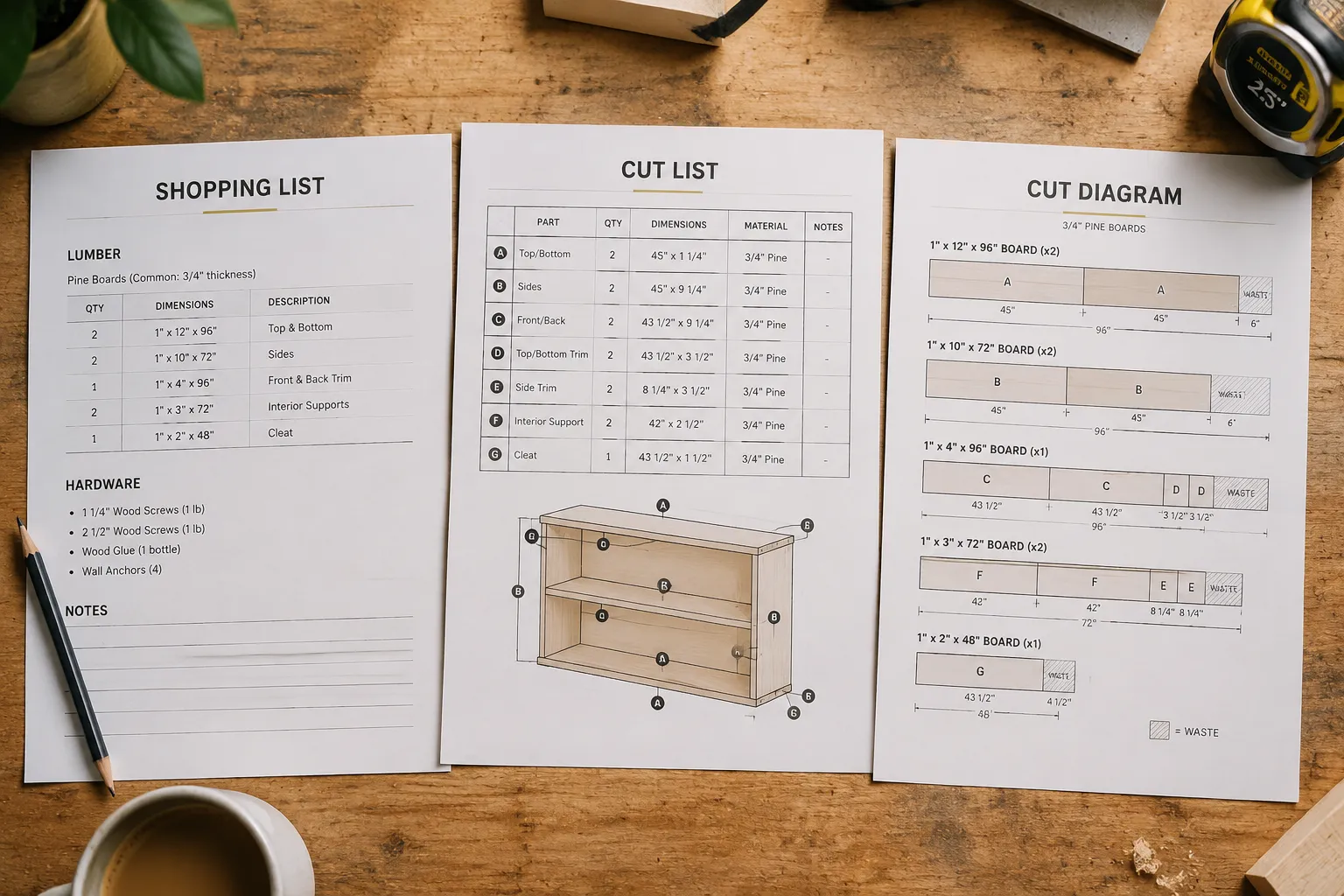
A shopping list tells you what to buy at the lumber yard. It specifies board lengths available for purchase, typically 8-foot, 10-foot, 12-foot, and 16-foot lengths. For example, a shopping list might call for “6 pieces of 2x4x10” and “4 pieces of 2x4x12.” This matches how lumber yards actually sell materials.
A cut list details every finished piece you’ll need. It shows the exact dimensions after cutting, like “8 pieces of 2×4 at 93 inches” for wall studs. The cut list helps during construction but doesn’t tell you what lumber lengths to purchase.
A cut diagram shows which pieces come from which boards. This diagram maps out how to cut your purchased lumber to minimize waste. It might show that one 12-foot 2×4 yields two 93-inch wall studs with minimal scrap.
The best shed plans include all three documents. The shopping list gets you the right materials, the cut list guides your cutting, and the cut diagram maximizes efficiency. Missing any one of these creates extra work and potential waste.
What a good shopping list looks like
A comprehensive shopping list breaks down materials by category and provides specific details that match how lumber yards organize their inventory. Here’s a partial example for a 10×12 shed:
Framing Lumber:
- 2x4x8: 12 pieces (wall plates and blocking)
- 2x4x10: 16 pieces (wall studs and door framing)
- 2x6x12: 8 pieces (floor joists)
- 2x8x12: 6 pieces (roof rafters)
- 2x10x12: 2 pieces (ridge beam)
Sheathing and Siding:
- 4×8 OSB 7/16″: 6 sheets (floor sheathing)
- 4×8 OSB 7/16″: 8 sheets (wall sheathing)
- 4×8 T1-11 siding: 12 sheets (exterior walls)
Roofing Materials:
- 4×8 OSB 1/2″: 10 sheets (roof decking)
- Architectural shingles: 4 squares
- 15lb felt paper: 4 rolls
- Drip edge: 80 linear feet
Hardware:
- 16d common nails: 10 lbs
- 8d common nails: 5 lbs
- 2.5″ deck screws: 5 lbs
- Joist hangers: 16 pieces
- Hurricane ties: 16 pieces
Notice how this list specifies exact lumber lengths (8-foot, 10-foot, 12-foot) and sheet counts that align with standard lumber yard inventory. A poor shopping list might just say “2×4 lumber” without specifying lengths or quantities.
Converting a cut list into a shopping list yourself
When you’re working with free plans that only provide a cut list, you can create your own shopping list with some basic planning. This process requires careful calculation but saves money compared to buying pre-made kits.

Start by grouping pieces by lumber size. Collect all the 2×4 pieces together, all the 2×6 pieces together, and so on. List them from longest to shortest within each group.
Calculate board requirements systematically. For 2x4s, start with your longest pieces and work down. If you need pieces that are 93″, 93″, 45″, and 45″, you can get all four from two 10-foot boards (120″ each) with minimal waste.
Account for standard lumber lengths. Most lumber yards stock 8′, 10′, 12′, and 16′ lengths. Some carry 14′ and 20′ boards but selection varies. Call ahead to confirm availability for longer lengths.
Add a waste factor. Include 10-15% extra material for mistakes, defective boards, or design changes. This buffer prevents project delays when you discover a board has a large knot right where you need to cut.
Consider delivery minimums. Many lumber yards require minimum orders for delivery. Sometimes buying a few extra boards to meet the minimum costs less than making multiple trips with your truck.
Double-check your math. Measure twice, buy once applies to shopping lists too. A mistake here multiplies throughout your project and can cost significant time and money.
The process takes 2-3 hours for a typical shed, but you’ll learn your project thoroughly and often spot potential construction issues before they become problems.
What comes included with shed plans
The contents of shed plan packages vary dramatically between providers, making it crucial to understand what you’re getting before purchase. Professional plan sets typically include far more than just the basic blueprints.
Complete plan packages usually contain:
- Detailed construction drawings with multiple views
- Foundation and footing specifications
- Framing diagrams with member sizes
- Complete materials list organized by trade
- Cut lists for all lumber pieces
- Hardware and fastener specifications
- Step-by-step construction instructions
- 3D illustrations for complex connections
Basic or free plans might only include:
- Simple elevation drawings
- Basic floor plan
- General material suggestions
- Minimal construction notes
The difference in value is substantial. I’ve purchased $30 plan sets that saved me dozens of hours compared to free alternatives. The comprehensive materials list alone justifies the cost by preventing multiple trips to the lumber yard and reducing waste.
Do shed plans list all materials needed
Quality shed plans should list virtually everything you need for construction, but the level of detail varies significantly. Professional plans typically include materials down to the last nail, while basic plans might miss crucial components.
Comprehensive plans include:
- All structural lumber with specific grades
- Fasteners with quantities and specifications
- Roofing materials including underlayment and flashing
- Siding and trim materials
- Foundation materials (concrete, gravel, etc.)
- Hardware like hinges, handles, and locks
- Electrical materials if wiring is included
Plans often miss these items:
- Paint, stain, or sealers
- Tools required for construction
- Rental equipment needs
- Permits and inspection fees
- Site preparation materials
- Concrete mixing supplies
Even excellent plans rarely include finishing materials since personal preferences vary widely. Budget an additional 15-20% of your material costs for items not specifically listed in the plans.
How to get a lumber list for shed building
Several approaches can provide you with accurate lumber requirements, depending on your budget and skill level. Each method has distinct advantages and limitations.
Purchase professional plans with shopping lists included from established providers like MyShedPlans. This option provides the most comprehensive and accurate material lists, typically including lumber, hardware, and specialty items.
Use online shed calculators for basic structures. Several websites offer free calculators that estimate lumber needs based on shed dimensions. These work well for simple gable-roof sheds but may not account for design variations or local building codes.
Consult with lumber yard professionals. Experienced yard staff can often create shopping lists from your plans, though this service varies by location. Some charge a fee that’s credited toward your purchase.
Hire a contractor for material takeoffs. Professional contractors can provide detailed material lists for $100-300, depending on project complexity. This option works well for complex designs or when you’re uncertain about your calculations.
The most reliable approach combines professional plans with verification from lumber yard staff. This double-check catches errors and ensures you’re buying appropriate materials for your local climate and building codes.
Shed plans vs lumber package deals
Pre-packaged shed kits eliminate the guesswork of material selection but come with significant trade-offs in cost and customization options. Understanding these differences helps you choose the best approach for your project.
Shed kits typically cost 40-60% more than building from plans due to packaging, marketing, and retail markups. However, they include everything needed and often come with warranties on materials and sometimes construction.
Plans offer maximum flexibility for customization, material selection, and timing. You can choose premium lumber, modify dimensions, or build in phases as budget allows. Quality plans also teach you about construction methods.
Kits provide convenience and consistency. All materials arrive together, eliminating multiple shopping trips and ensuring compatibility. Instructions are usually well-illustrated and tested through customer feedback.
Plans require more expertise in material selection and construction techniques. You’ll need to understand lumber grades, hardware specifications, and local building codes. This knowledge proves valuable for future projects.
For first-time builders, kits reduce the risk of costly mistakes. Experienced DIYers often prefer plans for the cost savings and design flexibility. Consider your skill level, available time, and budget when deciding between approaches.
Can you buy materials based on shed plans
Most lumber yards and home improvement stores can fulfill orders based on professional shed plans, but success depends on plan quality and your preparation. Clear communication and proper documentation streamline the process significantly.
Bring complete plans to the lumber yard including the shopping list, cut list, and construction drawings. Staff can verify material specifications and suggest local alternatives if needed.
Expect some substitutions based on local availability and building codes. For example, your plans might call for Douglas fir framing lumber, but only southern yellow pine might be available in your area.
Verify lumber grades and specifications. Plans should specify structural grades like “Stud” or “Construction” grade lumber. Don’t accept lower grades that might compromise structural integrity.
Order everything at once when possible. Lumber prices fluctuate, and buying materials over several months can increase costs. Bulk orders also often qualify for contractor discounts.
Arrange delivery for large orders. Most lumber yards offer delivery for orders over $500-1000. This service costs $50-150 but saves time and prevents damage from multiple trips with inadequate vehicles.
Professional plans make the ordering process straightforward, while incomplete plans often lead to confusion and delays. Invest in quality plans to ensure smooth material procurement.
What if shed plans don’t include a shopping list
When your plans lack a shopping list, you have several options to determine material requirements without starting over with new plans. The best approach depends on your construction experience and available time.
Create your own shopping list using the methods outlined earlier in this article. This process takes time but provides valuable project knowledge and often reveals potential construction issues early.
Hire a local contractor for a material takeoff. Many contractors offer this service for $100-200 and can often negotiate better material prices due to their supplier relationships.
Use lumber yard services. Some yards employ estimators who can create shopping lists from your plans. This service might be free with a material purchase commitment.
Consult online communities like Reddit’s r/DIY or specialized shed-building forums. Experienced builders often help with material calculations, though verify any advice independently.
Consider upgrading to better plans. Sometimes the cost of creating your own shopping list approaches the price of professional plans that include everything you need.
The time investment for creating accurate material lists often exceeds 10-15 hours for complex projects. Professional plans with included shopping lists typically cost $30-100, making them cost-effective when you value your time appropriately.
Best shed plans with detailed material lists
Several providers consistently deliver comprehensive plans with accurate shopping lists, though quality and customer service vary. Research providers carefully before purchasing to ensure you receive complete documentation.
Established plan providers typically offer the most comprehensive packages. Look for companies that have been in business for several years and provide customer support for questions about their plans.
Check customer reviews and ratings on independent websites rather than relying solely on testimonials on the provider’s website. Look for comments specifically about shopping list accuracy and completeness.
Verify what’s included before purchasing. Some providers advertise “complete material lists” but only include basic lumber requirements without hardware, roofing materials, or foundation specifications.
Consider plan complexity relative to your skill level. Detailed plans with comprehensive shopping lists work best when you understand the construction terminology and can follow technical drawings.
Look for money-back guarantees that allow you to return plans if they don’t meet your needs. Reputable providers stand behind their work and offer reasonable return policies.
Quality plans represent a small fraction of total project costs but significantly impact success. Spending $50-100 on professional plans often saves hundreds in materials and prevents costly construction errors.
How much does lumber cost for a shed
Lumber costs fluctuate significantly based on market conditions, but understanding typical price ranges helps with budget planning. A 10×12 shed typically requires $800-1500 in lumber alone, depending on material grades and local pricing.
Framing lumber represents the largest expense at roughly 40-50% of total lumber costs. Pressure-treated lumber for foundations costs 20-30% more than standard framing lumber but provides essential moisture protection.
Sheathing and siding materials account for another 30-40% of lumber expenses. OSB costs less than plywood but offers lower moisture resistance. T1-11 siding provides an economical exterior finish.
Regional price variations can be substantial. Areas near lumber mills typically offer better prices, while remote locations might pay 20-30% premiums due to transportation costs.
Seasonal pricing patterns affect costs significantly. Spring building season (March-June) typically brings higher prices, while fall and winter often offer better deals.
Bulk purchasing can reduce costs by 10-15% compared to buying materials piecemeal. Many lumber yards offer contractor pricing for orders over certain thresholds.
Budget an additional 20-30% beyond lumber costs for hardware, roofing materials, and finishing supplies. This comprehensive budget prevents project delays due to insufficient funds.
Are pre-made shed kits better than plans
The choice between shed kits and plans depends on your priorities regarding cost, customization, learning experience, and convenience. Each approach offers distinct advantages for different situations.
Shed kits excel in convenience and risk reduction. Everything arrives together with tested instructions, reducing the chance of missing materials or making costly errors. Kits often include customer support and sometimes warranties.
Plans provide superior value and flexibility. Building from plans typically costs 40-60% less than equivalent kits and allows complete customization of size, features, and materials. You also gain valuable construction knowledge.
Quality varies significantly in both categories. Cheap kits might use substandard materials or provide poor instructions, while low-quality plans might contain errors or omit crucial details.
Time investment differs substantially. Kits require minimal planning time but offer no flexibility for changes. Plans require more upfront planning but allow you to work at your own pace.
Skill requirements favor kits for beginners. Kits assume minimal construction knowledge, while plans require understanding of lumber grades, building codes, and construction techniques.
For most DIYers, quality plans offer better value unless convenience strongly outweighs cost considerations. The construction knowledge gained from building with plans proves valuable for future projects and maintenance.
Common mistakes when buying materials for shed projects
Material purchasing errors can significantly impact project timelines and budgets. Learning from common mistakes helps ensure your shed project proceeds smoothly from start to finish.
Underestimating quantities ranks as the most frequent error. Always add 10-15% waste factor to your calculations, and consider buying extra of commonly used items like 2x4s and plywood.
Ignoring lumber grades can compromise structural integrity. Plans specify grades for good reasons, don’t substitute lower grades to save money on structural members.
Forgetting about delivery logistics creates unnecessary complications. Ensure your site can accommodate delivery trucks, and have a plan for protecting materials from weather.
Buying materials too early exposes them to weather damage and theft. Purchase materials close to when you’ll use them, especially for items sensitive to moisture.
Overlooking local building codes might require material upgrades. Check requirements for foundation materials, lumber grades, and hardware specifications before ordering.
Failing to verify measurements leads to expensive corrections. Double-check all calculations and have someone else review your shopping list before placing large orders.
Choosing the wrong lumber yard can impact both price and service. Compare prices, but also consider delivery options, return policies, and staff expertise.
These mistakes often cost more in time and frustration than the original material savings. Invest effort in careful planning to avoid these common pitfalls.
Can you modify shed plans and still use the lumber list
Plan modifications often require shopping list adjustments, but minor changes might not affect material requirements significantly. Understanding which changes impact materials helps you modify plans successfully.
Dimensional changes always affect lumber quantities. Making a shed longer, wider, or taller requires recalculating framing members, sheathing, and roofing materials. Even small changes can push you into different lumber lengths.
Window and door modifications impact both framing lumber and siding materials. Adding openings reduces siding needs but requires additional framing lumber for headers and trimming.
Roof modifications significantly affect materials. Changing roof pitch, adding dormers, or switching from gable to hip roofs requires complete recalculation of rafters, sheathing, and roofing materials.
Foundation changes might require different materials entirely. Switching from skids to concrete pads affects both lumber and hardware requirements.
Simple modifications like changing siding materials or adding trim might not affect the basic lumber list significantly. You can often make these changes without major recalculations.
Document all changes carefully and recalculate affected materials. Consider consulting with lumber yard staff or contractors when making significant modifications to ensure structural adequacy.
Minor modifications work well with existing shopping lists, but major changes essentially create new projects requiring complete material recalculation.
FAQ
Do all paid shed plans include shopping lists?
Most reputable paid shed plan providers include shopping lists, but always verify what’s included before purchase. Some basic paid plans might only include construction drawings without material lists.
How accurate are the shopping lists in shed plans?
Professional plans typically provide shopping lists accurate within 5-10%, assuming you follow the plans exactly. Always add a 10-15% waste factor for cuts, defects, and mistakes.
Can I use a shopping list from one plan for a different sized shed?
No, shopping lists are specific to the exact plan dimensions and design. Even small size changes require recalculating lumber quantities and lengths.
What’s the difference between a materials list and a shopping list?
A materials list shows everything needed for the project, while a shopping list organizes materials by how lumber yards sell them (specific lengths and quantities).
Do shopping lists include hardware and fasteners?
Quality shopping lists include all materials including nails, screws, bolts, and specialty hardware. Basic lists might only cover lumber and leave hardware selection to you.
How much extra lumber should I buy beyond the shopping list?
Add 10-15% extra for waste, mistakes, and defective materials. For critical pieces like long rafters, consider buying one or two extra pieces.
Can lumber yards create shopping lists from my plans?
Some lumber yards offer this service, especially for good customers. The quality varies based on staff experience and plan completeness.
Are shopping lists different for different regions?
Basic quantities remain the same, but lumber species, grades, and availability vary by region. Local lumber yards can suggest appropriate substitutions.
What if I can’t find the exact lumber lengths in the shopping list?
Lumber yards can often special-order specific lengths, or you can buy longer boards and cut them down. Adjust quantities accordingly to minimize waste.
Do shopping lists account for local building codes?
Professional plans should meet standard building codes, but local requirements might differ. Always check local codes before ordering materials.
How detailed should a good shopping list be?
Excellent shopping lists specify lumber species, grades, dimensions, quantities, and hardware with part numbers. They should match how materials are actually sold.
Can I return unused materials if I buy too much?
Most lumber yards accept returns of unused materials in original condition, though restocking fees might apply. Check return policies before purchasing.
Ready to Start Your Shed Project?
Building a shed from quality plans with comprehensive shopping lists transforms a potentially frustrating experience into an enjoyable and educational project. The time invested in finding the right plans pays dividends throughout construction and beyond.
Professional shed plans with detailed shopping lists eliminate guesswork, reduce waste, and help ensure your project succeeds. While free plans might seem appealing, the time and potential mistakes often make quality paid plans the better investment.
Ready to find shed plans that include everything you need? Check out the comprehensive collection of professional shed plans with detailed shopping lists at MyShedPlans. These plans include complete materials lists, cut diagrams, and step-by-step instructions to ensure your project succeeds from foundation to roof.
