

The difference between free and paid shed plans is rarely the design itself, it’s the supporting documents. Paid shed plans typically include cut diagrams, shopping lists priced by board length, fastener schedules, 3D step-by-step assembly diagrams, and print-to-scale PDFs. Free plans usually supply basic dimensions and elevations while leaving material optimization, waste calculation, and build sequencing to you.
Key Takeaways:
• Paid plans save 4-8 hours of material calculation and cut optimization on a typical 10×12 shed
• Free plans can result in 15-25% material waste without proper cut diagrams
• Both free and paid options can produce identical finished sheds when executed properly
• Paid plans typically include customer support and revision access
• Free plans offer immediate access and active community forums for troubleshooting
• Commercial building rights are usually only included with paid plan licenses
• Material waste on a 10×12 shed build can cost $75-150 more with free plans
• Beginners save significant time and frustration with paid plans’ step-by-step guidance
Free Shed Plans vs Paid Shed Plans: What Is the Difference?
The difference is rarely the design, it’s the supporting documents. Paid shed plans typically add a cut diagram, a shopping list priced by board length, a fastener schedule, 3D step-by-step assembly diagrams and print-to-scale PDFs. Free plans usually supply dimensions and elevations and leave the material optimization, waste calculation and sequencing to you.
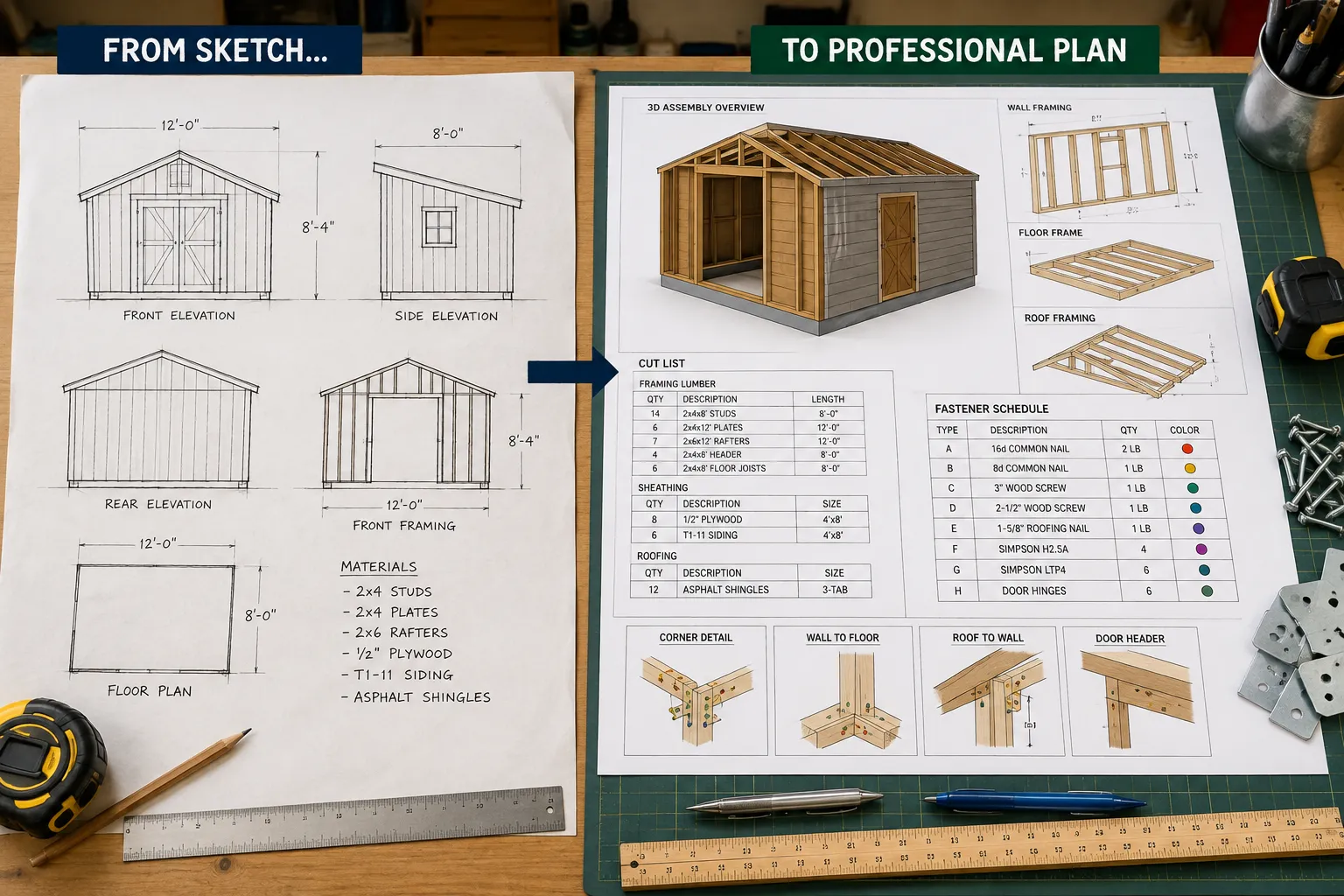
When I built my first shed using free plans from a woodworking forum, the design was solid but I spent an entire Saturday calculating lumber needs and optimizing cuts. The second time around, I used MyShedPlans at https://outdoorbuild.com/shedplans and had my shopping list ready in minutes.
The core structural design between free and paid plans is often identical. A 10×12 gable shed will have the same rafter spacing, foundation requirements, and wall framing whether you download it free or pay $37 for a complete package. What changes dramatically is how much work you do before the first board gets cut.
Side-by-Side Comparison
FeatureFree PlansPaid PlansCut DiagramCalculate yourselfOptimized cut list includedShopping ListEstimate materialsPrecise quantities by board lengthFastener ScheduleGeneric recommendationsSpecific screws/nails for each step3D Assembly DiagramsBasic elevationsStep-by-step 3D illustrationsScale PrintingOften distortedPrint-to-scale PDFsFoundation DetailBasic requirementsDetailed foundation plansRafter TemplatesCalculate anglesFull-size printable templatesCustomer SupportCommunity forumsDirect designer contactPlan RevisionsNo updatesFree updates and correctionsCommercial LicensePersonal use onlyResale rights often included
What the Paid Extras Are Actually Worth in Dollars
Material waste avoided on a typical 10×12 shed build ranges from $75-150 when using optimized cut diagrams versus estimating lumber needs yourself. I learned this the expensive way on my first build, where poor planning left me with a pile of unusable cutoffs and three additional trips to the lumber yard.
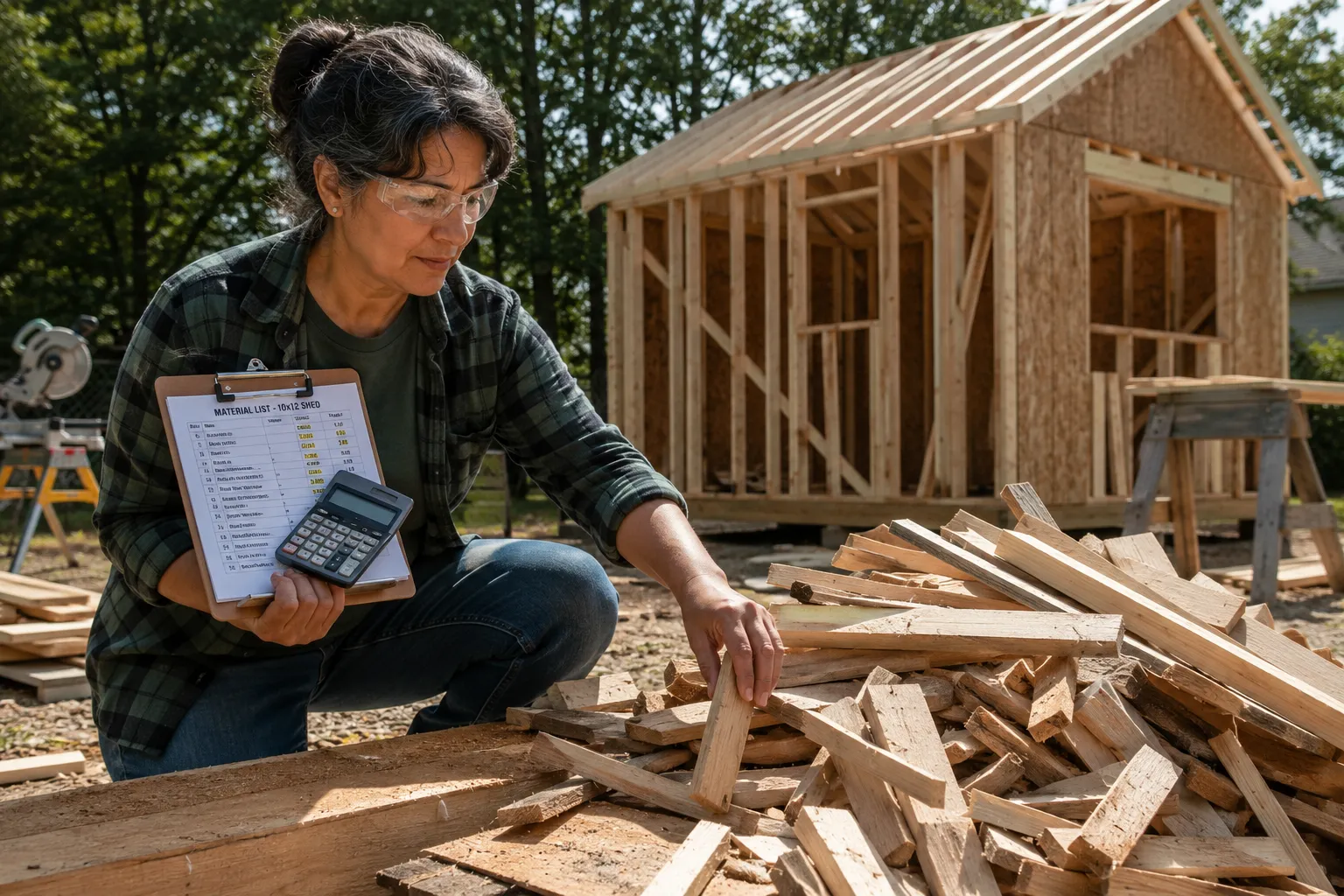
Time savings breakdown for a 10×12 shed:
- Material calculation and optimization: 4-6 hours saved
- Foundation layout and measurements: 1-2 hours saved
- Rafter cutting and assembly: 2-3 hours saved
- Troubleshooting unclear instructions: 3-5 hours saved
At a conservative $25/hour value for your time, paid plans save $250-400 in labor on a single build. The cut diagrams alone prevent the frustration of discovering you’re one 2x8x12 short on a Sunday when lumber yards are closed.
Rework avoided: Free plans often lack critical details like exact foundation anchor placement or proper door header sizing. These oversights can require partial disassembly and rebuilding sections, easily adding $50-100 in additional materials plus significant time delays.
The fastener schedule in paid plans prevents costly mistakes like using deck screws where structural screws are required, or buying expensive galvanized bolts when standard carriage bolts suffice.
What Free Plans Do Better
Free plans excel in three areas that paid options struggle to match: immediate access, active community support, and real-world photo documentation from actual builders.
Immediate access means no payment processing delays or email delivery issues. When inspiration strikes on a Saturday morning, you can download plans and start your material list within minutes. Popular free plan sites like Ana White or DIY Pete have plans available 24/7 without account creation.
Community build threads provide something paid plans cannot: photos of real builds in progress, modifications for different climates, and troubleshooting discussions from builders who faced identical challenges. The comment sections often contain valuable improvements and cost-saving modifications developed by the community.
Photo documentation from real builders shows how the finished shed looks in various settings, with different siding choices, and after weathering. This real-world feedback helps you anticipate issues and plan modifications before starting construction.
Free plans also encourage experimentation. Without the sunk cost of a paid purchase, builders feel more comfortable modifying dimensions, trying alternative materials, or combining elements from multiple designs.
Are Free Shed Plans Accurate and Up to Code
Most free shed plans from established woodworking sites are structurally sound but may not address local code requirements for your specific area. The plans typically follow standard construction practices for snow loads and wind resistance, but permit requirements vary significantly by municipality.
Free plans often omit electrical considerations, proper ventilation requirements, and setback regulations that affect shed placement. These details matter if you need a building permit or plan to add electrical service later.
Accuracy varies by source. Plans from experienced builders like Steve Maxwell or established sites like Family Handyman undergo editorial review. Plans from individual bloggers or forum posts may contain errors or outdated practices.
The biggest accuracy issue with free plans is missing dimensions or unclear assembly sequences. I’ve encountered free plans where the door framing dimensions didn’t match the materials list, requiring field modifications during construction.
Can You Build a Shed Successfully Using Only Free Plans
Yes, experienced DIYers regularly build excellent sheds using only free plans, but success depends heavily on your comfort level with problem-solving and material calculations. If you’ve built decks, framed walls, or completed similar projects, free plans provide sufficient guidance.
Beginners face steeper challenges without the detailed assembly sequences and troubleshooting guides included in paid plans. The learning curve involves understanding lumber grades, calculating rafter angles, and sequencing construction steps efficiently.
Tool requirements remain identical regardless of plan type. You’ll need a circular saw, drill, level, square, and measuring tape for any shed build. Free plans don’t require special tools that paid plans avoid.
The key success factor is accurately calculating materials before starting. Free plans that include a basic materials list prevent major oversights, but you’ll still need to account for waste, local lumber dimensions, and fastener quantities.
What Do Paid Shed Plans Include That Makes Them Worth the Cost
Paid plans justify their cost through time savings and mistake prevention rather than superior designs. The MyShedPlans collection at https://outdoorbuild.com/shedplans includes cut diagrams that can save hours of calculation and reduce material waste by 15-25%.
3D assembly diagrams show exactly how complex joints fit together, eliminating guesswork during construction. These visual guides are particularly valuable for roof assembly and door installation where mistakes are expensive to correct.
Precise materials lists account for local lumber dimensions and include fastener specifications for each construction phase. Instead of buying generic “deck screws,” you’ll know exactly when to use 2½” exterior screws versus 3″ structural screws.
Foundation details in paid plans often include multiple options (concrete piers, gravel pads, concrete slabs) with specific dimensions and spacing requirements. Free plans typically mention “level foundation” without detailed guidance.
Customer support provides direct access to the plan designer for clarification on unclear details or modifications for local conditions. This support can prevent costly mistakes and project delays.
How Much Money Do You Actually Save with Free vs Paid Plans
Free plans save the upfront cost ($20-50 typical for paid plans) but often cost more overall due to material waste and construction inefficiencies. On a 10×12 shed build, the total cost difference typically favors paid plans by $50-125 when accounting for waste and time value.
Material waste comparison:
- Free plans (estimated materials): 20-30% waste common
- Paid plans (optimized cuts): 5-10% waste typical
- Cost difference on $500 material bill: $75-125
Time investment difference:
- Free plans: 15-25 hours typical for first-time builders
- Paid plans: 12-18 hours with clear instructions
- Value of time saved: $75-175 at $25/hour
Hidden costs with free plans:
- Additional lumber yard trips: $15-30 in fuel and time
- Wrong fasteners purchased: $20-40 in unused materials
- Rework due to unclear instructions: $25-75 in additional materials
The break-even point occurs around the $300 material cost level. Smaller sheds (8×8 or smaller) often favor free plans, while larger builds (10×12 and up) typically justify paid plan costs through waste reduction alone.
Do Free Plans Work for Beginners or Do You Need Experience
Free plans work for beginners with strong problem-solving skills and patience for research, but paid plans significantly reduce the learning curve and frustration level for first-time builders.
Beginner challenges with free plans:
- Understanding lumber terminology and grades
- Calculating rafter angles and cuts
- Sequencing construction steps efficiently
- Troubleshooting unclear or missing dimensions
Experience level recommendations:
- Complete beginners: Paid plans with 3D diagrams and support
- Some DIY experience: Either option works with proper preparation
- Experienced builders: Free plans sufficient for most projects
The critical factor isn’t woodworking skill but comfort with problem-solving and research. Beginners who enjoy figuring things out often succeed with free plans, while experienced builders who value efficiency prefer paid options.
Tool familiarity matters more than plan type. If you’re comfortable with a circular saw and drill, the construction techniques remain identical regardless of plan source.
Which Is Better for a Small Backyard Shed: Free or Paid Plans
For small sheds (8×8 or smaller), free plans often provide the best value since material quantities are manageable and waste has less financial impact. The time savings from paid plans become less significant on simpler builds that complete in a weekend.
Small shed considerations:
- Material costs under $300 reduce waste impact
- Simpler construction requires fewer detailed diagrams
- Foundation requirements are straightforward
- Permit requirements often waived for small structures
Choose free plans if:
- Building 8×8 or smaller
- Comfortable with basic calculations
- Have flexible timeline
- Want to experiment with modifications
Choose paid plans if:
- Need project completed quickly
- Prefer detailed step-by-step guidance
- Building in area with strict codes
- Plan to build multiple sheds
Small sheds also benefit from the active communities around popular free plans, where modifications for different uses (garden storage, bike shed, workshop) are well-documented through user photos and discussions.
Can You Get Customer Support If Something Goes Wrong with Free Plans
Free plans rely on community support through forums, comment sections, and social media groups rather than direct designer contact. This community support can be excellent for common issues but less reliable for urgent problems or unique situations.
Community support advantages:
- Multiple perspectives on problem-solving
- Real-world modification examples
- Available 24/7 through active forums
- Photos of similar issues and solutions
Community support limitations:
- Response time varies (hours to days)
- Advice quality depends on responder experience
- No accountability for incorrect suggestions
- May not address local code requirements
Popular free plan sources like Ana White, DIY Pete, and Family Handyman maintain active communities where experienced builders regularly help newcomers. The key is posting clear photos and specific questions rather than vague requests for help.
Paid plan support typically includes direct email contact with the designer, guaranteed response times, and accountability for plan accuracy. This support proves valuable when facing deadline pressure or complex modifications.
License and Resale Rights: What You Can Do with Each Type
This overlooked aspect becomes crucial if you plan to build sheds for others or start a small construction business. Free plans typically restrict use to personal projects, while paid plans often include commercial licensing rights.
Free plan restrictions:
- Personal use only in most cases
- Cannot sell sheds built from free plans commercially
- Cannot redistribute or modify plans for others
- May violate terms by posting plan details online
Paid plan licensing typically includes:
- Personal and commercial use rights
- Permission to build and sell completed sheds
- Right to modify plans for customer needs
- Sometimes includes resale rights for the plans themselves
The commercial licensing in paid plans can justify the cost after building just 2-3 sheds for others. If you’re considering shed building as a side business or helping neighbors with their projects, verify the licensing terms before starting.
Important note: This article contains affiliate links. If you purchase plans through the provided links, I may earn a commission at no additional cost to you.
Which to Choose for Your Situation
Choose free plans if you’re:
A weekend warrior building your first small shed (8×10 or smaller) with a flexible timeline and strong problem-solving skills. You enjoy figuring things out, don’t mind multiple trips to the lumber yard, and want to experiment with modifications. The community aspect appeals to you, and you’re building primarily for personal use.
Choose paid plans if you’re:
A busy professional who values time efficiency over cost savings, building a larger shed (10×12 or bigger), or planning multiple builds. You prefer clear instructions and professional support, want to minimize material waste, or need commercial licensing rights. The upfront cost is acceptable for the time and frustration savings.
Choose the hybrid approach if you’re:
An experienced DIYer who downloads free plans for design inspiration but creates your own optimized materials list and cut diagrams. This approach works well for builders with strong math skills who want design variety without paying for services they can provide themselves.
Ready to Start Your Shed Project?
Whether you choose free or paid plans, success depends more on careful preparation and realistic timeline expectations than the plan source itself. Both approaches can produce excellent results when matched to your skill level and project requirements.
For those ready to dive into a comprehensive collection of professionally designed shed plans with all the supporting documents discussed in this article, explore the complete MyShedPlans library at https://outdoorbuild.com/shedplans. The collection includes over 12,000 plans with cut diagrams, materials lists, and step-by-step assembly guides designed to minimize waste and maximize your building success.
Conclusion
The choice between free and paid shed plans ultimately comes down to your priorities: time versus money, convenience versus cost savings, and support versus independence. Free plans work excellently for experienced builders and those who enjoy the problem-solving aspect of construction. Paid plans shine when time is limited, the project is complex, or commercial use is planned.
Both options can produce identical finished sheds when executed properly. The difference lies in the journey: free plans require more preparation and problem-solving, while paid plans streamline the process through detailed documentation and professional support. Consider your skill level, available time, and project scope when making your decision, and remember that the most expensive plan is the one that sits unused while your tools gather dust in the garage.

SEO Meta Title: Free vs Paid Shed Plans: Key Differences & Which to Choose