

Arlington’s humid subtropical climate creates perfect conditions for mildew and algae growth on home exteriors, with local professionals reporting it as one of the top reasons homeowners seek cleaning services. Effective mildew removal requires understanding the specific challenges Texas humidity presents and choosing the right cleaning methods to protect your home’s surfaces while eliminating unsightly growth.
Key Takeaways
• Arlington’s climate creates ideal conditions for mildew with high humidity, frequent rain, and warm temperatures
• Professional mildew removal typically costs $200-600 for average Arlington homes depending on size and severity
• Bleach solutions work but can damage paint and landscaping if not properly diluted and applied
• Pressure washing is most effective for severe mildew but requires expertise to avoid surface damage
• Prevention involves regular cleaning every 6-12 months and improving drainage around your home
• Spring and fall are optimal seasons for mildew removal in Texas climate
• Health risks from mildew exposure include respiratory issues and allergic reactions
What’s the Difference Between Mildew and Mold
Mildew appears as a thin, powdery gray or white coating on surfaces, while mold forms thicker, fuzzy patches in darker colors like black, green, or brown. Both are fungi, but mildew typically grows on flat surfaces like siding and stays surface-level, making it easier to remove than mold which can penetrate deeper into materials.
Key differences:
-
Mildew: Flat, powdery, gray/white, surface-level growth
-
Mold: Fuzzy, thick, dark colors, penetrates materials
-
Removal difficulty: Mildew wipes off easier; mold often requires aggressive treatment
-
Health impact: Both cause respiratory issues, but mold is generally more dangerous
On Arlington homes, you’ll most commonly see mildew on north-facing walls and areas with poor air circulation where moisture lingers.
Why Houses in Arlington Texas Get Mildew So Easily
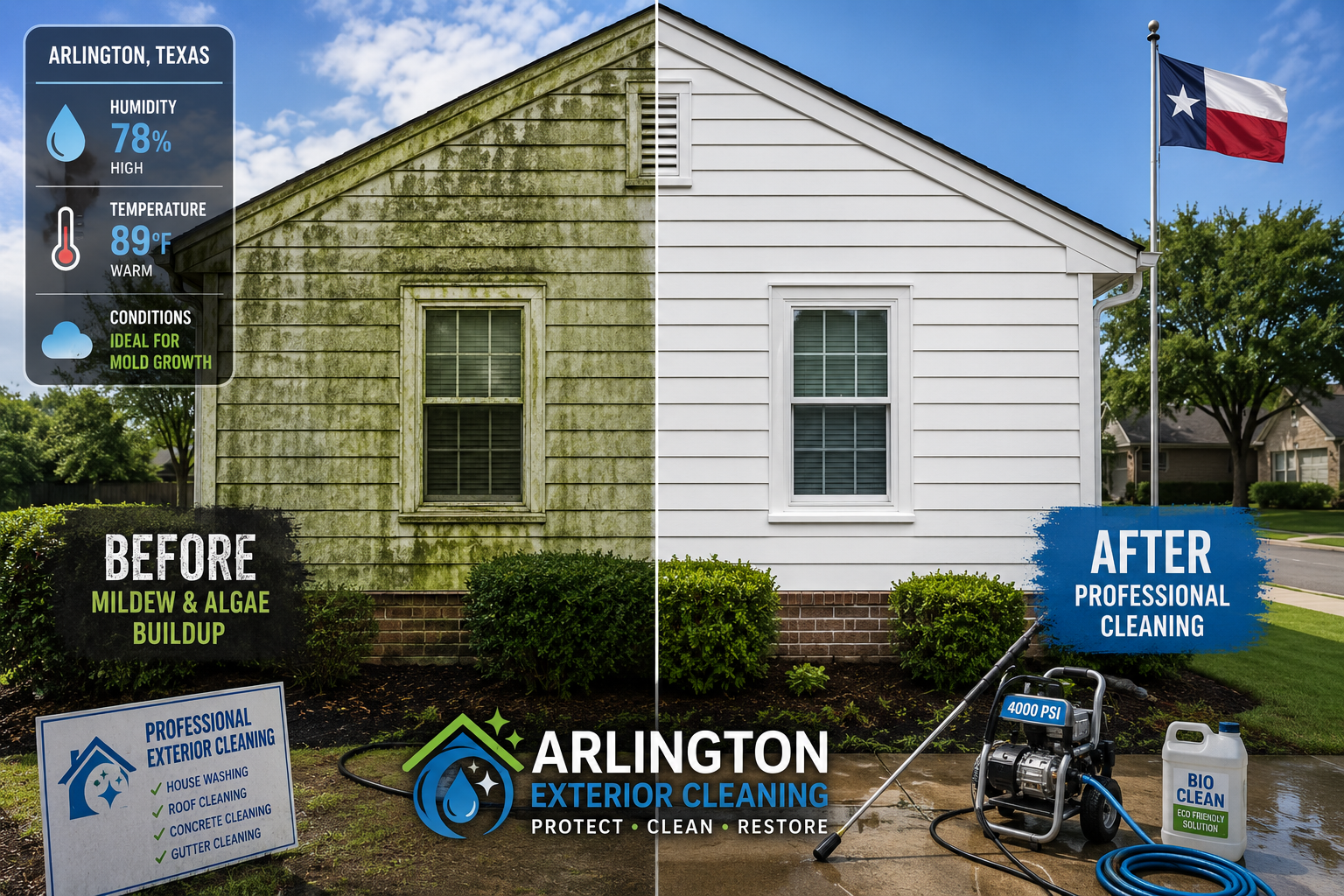
Arlington’s climate combines three factors that create mildew paradise: average humidity levels of 65-75%, frequent spring and summer thunderstorms, and temperatures that stay warm enough year-round for fungal growth. The city’s clay soil also contributes by retaining moisture around home foundations longer than sandy soils would.
Climate factors promoting mildew growth:
-
High humidity: 65-75% average, often higher during summer months
-
Frequent rain: Spring storms and summer downpours create constant moisture
-
Warm temperatures: Rarely cold enough to kill fungal spores
-
Clay soil: Retains water, keeping ground moisture high around homes
Common problem areas on Arlington homes:
-
North-facing walls that receive less direct sunlight
-
Areas under eaves and overhangs where air doesn’t circulate
-
Brick surfaces that absorb and hold moisture
-
Vinyl siding joints where water can accumulate
I’ve noticed that homes in established Arlington neighborhoods with mature trees often struggle more with mildew because the shade keeps surfaces from drying completely between rain events.
How to Remove Mildew from Siding Without Damaging Paint
Start with the gentlest method first: mix one part white vinegar with three parts water in a spray bottle, apply to affected areas, let sit for 10 minutes, then scrub with a soft brush and rinse thoroughly. This approach removes most mildew without harming paint or landscaping.
Step-by-step safe mildew removal:
-
Test first: Try cleaning solution on an inconspicuous area
-
Protect plants: Cover nearby vegetation with plastic sheeting
-
Apply solution: Spray from bottom up to prevent streaking
-
Wait and scrub: Let solution work 10-15 minutes, then use soft-bristled brush
-
Rinse thoroughly: Use garden hose to remove all cleaning residue
Safe cleaning solutions for painted surfaces:
-
Vinegar solution: 1 part vinegar, 3 parts water (safest option)
-
Mild detergent: 1 tablespoon dish soap per gallon of water
-
Oxygen bleach: Follow package directions (safer than chlorine bleach)
Avoid these mistakes: Never use chlorine bleach at full strength, don’t scrub with abrasive materials like steel wool, and don’t let cleaning solutions dry on the surface without rinsing.
Best Mildew Removal Products for Texas Humidity
Oxygen bleach-based cleaners work best in Texas humidity because they’re effective against organic growth while being gentler on surfaces and landscaping than chlorine bleach. Products like OxiClean or Concrobium Mold Control are specifically formulated to handle persistent moisture conditions.
Top product categories for Texas conditions:
-
Oxygen bleach cleaners: Effective and surface-safe
-
Enzymatic cleaners: Break down organic matter naturally
-
Copper-based treatments: Longer-lasting prevention
-
Professional-grade concentrates: For severe infestations
Application tips for humid conditions:
-
Clean during cooler morning hours when humidity is lower
-
Allow extra drying time between application and rinsing
-
Reapply treatment if rain occurs within 24 hours of cleaning
Choose products labeled specifically for exterior use and mildew removal rather than general-purpose cleaners that may not be formulated for organic growth.
Can I Use Bleach to Clean Mildew Off My House
Yes, you can use bleach for mildew removal, but it must be properly diluted (1 part bleach to 10 parts water) and applied carefully to avoid damaging paint, killing plants, or creating safety hazards. Chlorine bleach kills mildew effectively but can cause more harm than good if used incorrectly.
Safe bleach application guidelines:
-
Proper dilution: Never exceed 1:10 bleach-to-water ratio
-
Plant protection: Thoroughly wet and cover all vegetation
-
Safety gear: Wear eye protection, gloves, and avoid inhaling vapors
-
Weather considerations: Don’t apply in direct sunlight or windy conditions
When to avoid bleach:
-
Colored or dark siding that may fade
-
Near sensitive plants or water features
-
On surfaces with existing paint damage
-
If you’re inexperienced with chemical cleaning
Better alternatives: Oxygen bleach or enzymatic cleaners provide similar results with less risk to your property and landscaping.
How Often Should I Clean Mildew Off My Home in Arlington
Arlington homes should be cleaned for mildew removal every 6-12 months, with north-facing walls and shaded areas potentially needing attention twice yearly. The frequency depends on your home’s exposure to moisture, shade coverage, and how quickly you want to address aesthetic issues.
Cleaning schedule recommendations:
-
High-risk areas: Every 6 months (north walls, under eaves)
-
Moderate exposure: Annually for most surfaces
-
Low-risk areas: Every 18-24 months (south-facing, well-ventilated)
Signs it’s time for cleaning:
-
Visible green, gray, or black discoloration
-
Musty odors near exterior walls
-
Streaking or staining on siding
-
Slippery surfaces on walkways or patios
Seasonal timing: Spring cleaning removes winter buildup before summer humidity peaks, while fall cleaning prepares surfaces for the dormant season.
Regular maintenance cleaning is much easier and less expensive than dealing with heavy mildew infestations that require professional intervention.
Mildew Removal Cost for House Exterior
Professional mildew removal for Arlington homes typically costs $200-600 for average-sized properties, with pricing based on square footage, severity of growth, and accessibility of affected areas. DIY cleaning costs $30-80 in supplies but requires significant time and physical effort.
Professional service pricing factors:
-
House size: $0.15-0.30 per square foot of exterior surface
-
Severity: Light cleaning vs. heavy treatment affects pricing
-
Accessibility: Two-story homes or complex rooflines cost more
-
Additional services: Gutter cleaning, deck treatment add to total
DIY cost breakdown:
-
Cleaning supplies: $20-40 for chemicals and tools
-
Equipment rental: $50-100 if pressure washer needed
-
Time investment: 6-12 hours for average home
When to hire professionals: If you have a two-story home, extensive mildew coverage, or lack experience with pressure washing equipment, professional service often provides better value and results.
What Causes Mildew and Algae Growth on Homes
Mildew and algae need three things to thrive: moisture, organic matter (like dirt and pollen), and temperatures above 60°F. Arlington’s climate provides all three conditions regularly, especially in areas with poor drainage, inadequate sunlight, or surfaces that stay damp after rain.
Primary growth factors:
-
Constant moisture: From humidity, rain, irrigation systems
-
Organic nutrients: Dirt, pollen, leaves, and other debris
-
Warm temperatures: Year-round conditions suitable for growth
-
Poor air circulation: Areas where surfaces don’t dry completely
Common contributing conditions:
-
Clogged gutters that overflow onto siding
-
Landscaping that holds moisture against the house
-
Sprinkler systems that spray exterior walls
-
Trees or structures that block sunlight and airflow
Surface preferences: Mildew grows fastest on porous materials like wood and concrete, but also thrives on vinyl siding joints where moisture can accumulate.
Is Mildew Dangerous to Your Health
Mildew exposure can trigger respiratory problems, allergic reactions, and skin irritation, especially in people with asthma or compromised immune systems. While generally less dangerous than toxic black mold, mildew still releases spores that can cause health issues when inhaled or touched.
Health symptoms from mildew exposure:
-
Respiratory: Coughing, wheezing, throat irritation
-
Allergic reactions: Sneezing, runny nose, watery eyes
-
Skin contact: Rashes, itching, dermatitis
-
Severe cases: Headaches, fatigue in sensitive individuals
Risk factors that increase sensitivity:
-
Existing asthma or respiratory conditions
-
Compromised immune systems
-
Age (children and elderly more susceptible)
-
Prolonged exposure to high concentrations
Safety during cleaning: Always wear protective equipment including gloves, eye protection, and masks when performing mildew removal to avoid direct contact with spores.
How to Prevent Mildew from Coming Back on My House
Improve drainage around your home’s foundation, trim vegetation to increase air circulation, and clean gutters regularly to prevent water from running down exterior walls. The key is eliminating the moisture conditions that allow mildew to establish and spread.
Effective prevention strategies:
-
Drainage improvement: Grade soil away from foundation, install proper downspout extensions
-
Vegetation management: Trim bushes and trees to allow airflow and sunlight
-
Gutter maintenance: Clean twice yearly and ensure proper water flow
-
Regular cleaning: Light maintenance cleaning prevents heavy buildup
Moisture control measures:
-
Fix leaky outdoor faucets and irrigation systems
-
Redirect sprinklers away from house surfaces
-
Improve attic and crawl space ventilation
-
Address any roof leaks promptly
Protective treatments: Apply mildew-resistant coatings or sealers to problem areas, especially north-facing walls and areas under eaves where prevention is most challenging.
Pressure Washing vs Hand Cleaning for Mildew Removal
Pressure washing removes mildew faster and more thoroughly than hand cleaning, but requires expertise to avoid damaging siding, forcing water behind surfaces, or stripping paint. Hand cleaning with brushes and cleaning solutions is safer for DIY projects but more labor-intensive and less effective on stubborn growth.
Pressure washing advantages:
-
Efficiency: Cleans large areas quickly
-
Effectiveness: Removes embedded mildew and stains
-
Reach: Handles two-story areas without ladders
-
Deep cleaning: Gets into textured surfaces and crevices
Hand cleaning benefits:
-
Surface safety: No risk of pressure damage
-
Precision: Better control around delicate areas
-
Chemical effectiveness: More contact time for cleaning solutions
-
Lower cost: No equipment rental or professional fees
Best approach: Use hand cleaning for delicate surfaces, painted areas, and routine maintenance. Reserve pressure washing for severe mildew problems, unpainted surfaces, or when hiring experienced professionals.
Does Mildew Removal Damage Roof Shingles
Proper mildew removal doesn’t damage roof shingles when done correctly, but high-pressure washing or harsh chemicals can strip granules from asphalt shingles or crack older materials. The safest approach for roofs is low-pressure application of specialized cleaning solutions followed by gentle rinsing.
Safe roof cleaning methods:
-
Low-pressure spray: Maximum 1,500 PSI for asphalt shingles
-
Soft washing: Chemical treatment with minimal pressure
-
Proper technique: Spray downward, never up under shingles
-
Professional assessment: Have older roofs evaluated before cleaning
Risks to avoid:
-
High pressure: Can lift or crack shingles
-
Wrong chemicals: Bleach can damage certain roofing materials
-
Improper direction: Spraying upward forces water under shingles
-
Walking on roof: Can cause damage to wet or fragile shingles
When to hire professionals: Roof mildew removal requires specialized equipment and expertise. Most homeowners should leave roof cleaning to experienced contractors who understand proper techniques and safety requirements.
When is the Best Time of Year to Remove Mildew in Texas
Spring (March-May) and fall (September-November) are optimal for mildew removal in Texas because temperatures are moderate, humidity is lower than summer, and you can address growth before peak seasons. Avoid summer cleaning when heat and humidity make conditions dangerous and less effective.
Seasonal timing advantages:
Spring cleaning benefits:
-
Removes winter accumulation before summer growth season
-
Moderate temperatures make work more comfortable
-
Surfaces dry faster in lower humidity
-
Prepares home for summer entertaining season
Fall cleaning advantages:
-
Addresses summer growth before winter dormancy
-
Cooler temperatures reduce chemical evaporation
-
Less chance of immediate re-growth
-
Prepares surfaces for winter weather protection
Avoid these times:
-
Summer: High heat and humidity make cleaning dangerous and less effective
-
Winter: Freezing temperatures can damage wet surfaces and equipment
-
During storms: Wet conditions prevent proper application and drying
Weather considerations: Choose days with low humidity, mild temperatures (60-80°F), and no rain in the 24-hour forecast for best results.
FAQ
How long does it take to remove mildew from a house exterior?
DIY mildew removal typically takes 6-12 hours for an average Arlington home, while professional services can complete the job in 2-4 hours using specialized equipment and techniques.
Can mildew removal increase my home’s value?
Yes, clean exterior surfaces can improve curb appeal and potentially increase home value by $2,000-5,000, especially important in Arlington’s competitive real estate market.
Will homeowner’s insurance cover mildew damage?
Most standard policies don’t cover mildew removal or damage caused by lack of maintenance, but may cover underlying issues like roof leaks that contribute to mildew growth.
Is it safe to remove mildew myself if I’m pregnant?
Pregnant women should avoid mildew removal due to potential health risks from spore exposure and cleaning chemicals. Hire professionals or have someone else handle the cleaning.
How do I know if it’s mildew or just dirt on my siding?
Mildew appears as green, gray, or black patches that feel slimy when wet and powdery when dry. Dirt typically washes off easily with plain water, while mildew requires cleaning solutions.
Can mildew removal damage my landscaping?
Yes, chlorine bleach and some cleaning chemicals can kill plants. Always cover vegetation with plastic and rinse thoroughly with water before and after cleaning.
Should I remove mildew before painting my house?
Absolutely. Painting over mildew will cause the new paint to fail quickly. All surfaces must be completely clean and dry before applying new paint or stain.
How quickly does mildew return after cleaning?
In Arlington’s humid climate, mildew can begin returning within 3-6 months on susceptible surfaces, especially north-facing walls and shaded areas with poor air circulation.
What’s the difference between soft washing and pressure washing for mildew?
Soft washing uses low pressure (under 500 PSI) with specialized chemicals, while pressure washing relies on high-pressure water (1,500+ PSI). Soft washing is gentler on surfaces but may require longer treatment times.
Can I prevent mildew with regular house washing?
Regular cleaning every 6-12 months significantly reduces mildew buildup, but Arlington’s climate means some growth is inevitable. Consistent maintenance makes removal easier and less expensive.
If you’re dealing with persistent mildew problems on your Arlington home, don’t let it damage your property’s appearance and value. Contact Zane at Pure Pressure Washing at 682-386-5957 for professional mildew removal that protects your surfaces while eliminating unsightly growth. With local expertise in Texas climate challenges, Pure Pressure Washing can restore your home’s exterior and provide guidance on preventing future mildew problems.
Conclusion
Arlington’s humid climate creates ideal conditions for mildew and algae growth, but regular maintenance and proper cleaning techniques can keep your home’s exterior looking great year-round. Whether you choose DIY methods with safe cleaning solutions or professional services for thorough treatment, addressing mildew promptly prevents more serious problems and protects your investment. Remember that prevention through improved drainage, vegetation management, and regular cleaning is always more cost-effective than dealing with severe infestations. For challenging cases or when safety is a concern, professional mildew removal services provide the expertise and equipment needed to restore your home’s appearance without risking damage to surfaces or landscaping.