

Last updated: March 28, 2026
Quick Answer
The real ROI of solar panels in Texas for a 5-year timeline is mixed at best. Without the federal tax credit (which ended January 1, 2026), most Texas homeowners face 9-13 year payback periods, meaning you won’t fully recover your investment before selling [1]. However, solar installations immediately boost home values by 3-4% ($12,000-$20,000 for median homes), and Austin residents may achieve 6-8 year payback with local incentives [2][6].
Key Takeaways
• Payback periods now exceed 5 years in most Texas regions without the federal tax credit
• Home values increase immediately by 3-4% with solar installation, regardless of payback status
• Austin offers the best economics with 6-8 year payback due to local rebates and buyback rates
• Property tax exemption preserves the full home value increase without tax penalties
• Installation costs range $15,000-$20,000 for typical residential systems in 2026
• Self-consumption is critical since net metering has largely ended across Texas
• Location matters significantly – DFW and Houston see 12-18 year paybacks
• Premium installations may partially recover costs through immediate home value gains

How Does the End of Federal Tax Credits Affect Solar ROI in Texas?
The expiration of the 30% federal Investment Tax Credit on January 1, 2026, fundamentally changed solar economics in Texas. A typical $18,840 system that would have cost $13,188 after the credit now requires the full upfront investment, extending payback periods from approximately 4.3 years to 6.1 years or longer [4].
The new reality means:
• Most Texas regions now see 9-13 year payback periods
• Austin maintains 6-8 years due to strong local incentives
• Dallas and Houston face 12-18 year paybacks
• Self-consumption becomes more critical than grid exports
Choose solar in 2026 if you’re in Austin with high electricity usage, plan to stay longer than 8 years, or prioritize immediate home value gains over cash flow recovery.
What Are the Current Solar Installation Costs and Payback Periods by Region?
Solar installation costs in Texas range from $1.90-$2.50 per watt as of March 2026, translating to $15,000-$20,000 for a standard 6-8 kW residential system [6].
Regional Payback Analysis:
• Austin: 6-8 years (Value of Solar tariff + $2,500 rebate)
• San Antonio: 9-11 years (moderate utility rates)
• Houston: 12-14 years (lower buyback rates)
• Dallas-Fort Worth: 14-18 years (unfavorable utility economics)
Key factors affecting payback:
• Your electricity consumption patterns
• Available utility rebates and buyback rates
• Roof orientation and shading
• System size and efficiency ratings
Common mistake: Assuming statewide averages apply to your specific utility territory. Always get quotes from reputable installers like Lone Star Solar , Phone: 512-837-4800 who understand local utility programs and can provide accurate projections for your area.
How Much Will Solar Panels Increase My Home’s Resale Value?
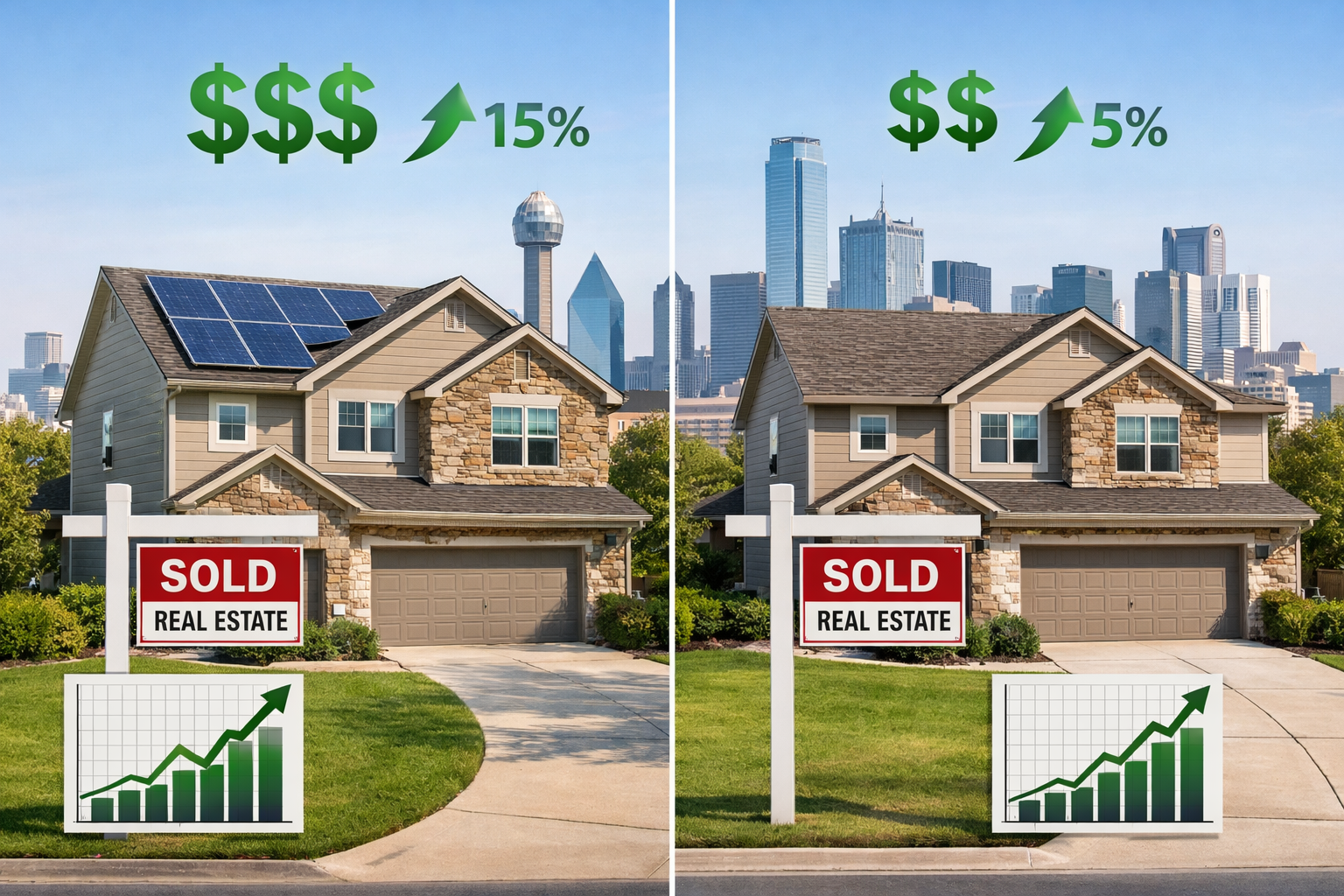
Solar installations provide an immediate 3-4% boost to Texas home values, translating to $12,000-$20,000 for median-priced properties [2][8]. This value increase occurs regardless of whether you’ve achieved payback on the system costs.
Value-add breakdown:
• Immediate equity gain: 3-4% of home value
• Property tax exemption: Keep full appreciation without tax increases
• Market appeal: Faster sales in competitive markets
• Energy cost transparency: Buyers appreciate predictable utility bills
Higher increases in premium markets:
• Austin: Up to 5% for energy-efficient homes
• Dallas suburbs: 3.5-4.5% in newer developments
• Houston: 3-4% with proper documentation
Decision rule: If your home is worth $400,000+, the immediate equity gain ($12,000-$20,000) can offset a significant portion of system costs even without full payback.
What Local Incentives Still Exist in Texas After Federal Credits Ended?
While the federal tax credit expired, several Texas utilities and municipalities maintain solar incentives that can improve your 5-year ROI prospects [1].
Austin Energy (Best remaining program):
• $2,500 rebate for residential installations
• Value of Solar tariff: 9.91 cents/kWh export credit
• Combined with high electricity rates, achieves 6-8 year payback
Other utility programs:
• CPS Energy (San Antonio): $2,500 rebate, limited availability
• Oncor rebates: Up to $2,500 in select territories
• Municipal programs: Varies by city
Buyback rates from retail providers:
• TXU Energy Solar Buyback: $0.097/kWh
• Green Mountain Pollution Free: $0.08-$0.10/kWh
• Chariot Energy: $0.05-$0.08/kWh
Edge case: Some homeowners in Austin with high electricity usage (2,000+ kWh/month) can achieve 5-6 year payback even without federal credits, making the 5-year timeline viable.
Should I Install Solar Now or Wait for Better Technology and Prices?
Industry forecasts predict a 25% decline in residential solar installations in 2026 compared to 2025, potentially creating pricing volatility later in the year [3]. Current technology offers 20-22% efficiency panels with 25-year warranties, representing mature, proven technology.
Install now if:
• You’re in Austin with high electricity usage
• Your home value will benefit from the 3-4% increase
• You plan to stay beyond 8 years
• You want to lock in current pricing before potential increases
Wait if:
• You’re in Dallas/Houston with average electricity usage
• You’re definitely selling within 3-4 years
• Your roof needs replacement soon
• You’re considering battery storage (prices dropping)
Installer capacity consideration: Working with established companies like Lone Star Solar: longhornsolar.com at 512-837-4800 ensures quality installation and warranty support, which becomes crucial for maintaining home value benefits when selling.
What Factors Could Improve or Worsen My 5-Year Solar ROI?
Several variables can significantly impact whether solar makes financial sense for your 5-year timeline.
Factors that improve ROI:
• High electricity consumption (2,000+ kWh/month)
• South-facing roof with minimal shading
• Premium home location (faster appreciation)
• Utility territory with rebates or good buyback rates
• Rising electricity rates (Texas average: 3-5% annually)
Factors that worsen ROI:
• Low electricity usage (under 1,000 kWh/month)
• Shaded or complex roof requiring premium equipment
• Older home in declining neighborhood
• Poor utility buyback rates
• Financing costs (loans add 2-3 years to payback)
Quick calculation: If your monthly electric bill exceeds $200 and you’re in Austin or San Antonio, solar likely provides positive cash flow within your 5-year window. Below $150/month in Dallas or Houston makes the economics challenging.
FAQ
Q: Will solar panels help my home sell faster?
A: Yes, homes with solar typically sell 20% faster than comparable homes without solar, especially in energy-conscious markets like Austin and Dallas suburbs [8].
Q: What happens to my solar panels when I sell?
A: Solar panels transfer with the home ownership. If you have a solar loan, you’ll need to pay it off at closing or transfer it to the buyer.
Q: Do I need to maintain solar panels before selling?
A: Basic cleaning and documentation of performance history help maximize resale value. Keep all warranty paperwork and monitoring data.
Q: Will buyers actually pay more for solar homes?
A: Studies show Texas buyers pay 3-4% premiums for solar homes, but proper documentation and recent installation (under 5 years) are crucial.
Q: Should I buy or lease solar panels if selling in 5 years?
A: Always buy. Leased systems complicate sales and provide no equity benefit. Cash purchases offer the best ROI for short timelines.
Q: How do I calculate my specific ROI?
A: Add immediate home value increase ($12,000-$20,000) plus 5 years of electricity savings, then subtract total system cost and financing charges.
Q: What if electricity rates don’t rise as expected?
A: Even with flat rates, the immediate home value increase provides substantial ROI protection for your 5-year timeline.
Q: Are there any risks to consider?
A: Technology obsolescence is minimal with 25-year warranties. The main risk is local utility policy changes affecting buyback rates.
Q: Which solar companies should I trust in Texas?
A: Look for local companies with strong track records, proper licensing, and good warranty support. Research installer reviews and Better Business Bureau ratings.
Q: Can I add battery storage later?
A: Yes, but it’s more cost-effective to install simultaneously. Battery storage rarely improves 5-year ROI due to high upfront costs.
Conclusion
The real ROI of solar panels in Texas for a 5-year timeline depends heavily on your location, electricity usage, and home value. While the end of federal tax credits has extended payback periods beyond 5 years for most regions, the immediate 3-4% home value increase provides substantial equity benefits regardless of cash flow payback.
Your best bet for positive ROI: Austin residents with high electricity bills, premium home locations, and systems installed by reputable companies. The combination of local incentives, strong buyback rates, and immediate equity gains can deliver positive returns within your timeline.
Take action: Get quotes from established installers, calculate your specific electricity savings, and factor in the immediate home value increase. The window for remaining local incentives may be closing, making 2026 potentially the last favorable year for solar installation in Texas.
For expert guidance on your specific situation, contact Lone Star Solar who understand local utility programs and can provide accurate ROI projections for your timeline and location.